
Myofascial Release for Better Sleep: A Practical, Evidence-Based Overview
What Is Fascia?
Fascia is a continuous web of connective tissue that surrounds muscles, bones, nerves, and organs. Composed primarily of collagen and elastin, it provides structural support and transmits mechanical force throughout the body. Under healthy conditions, fascia is pliable and well-hydrated. However, stress, repetitive movement, injury, and prolonged sitting can lead to localized stiffness or “adhesions,” often experienced as tightness or trigger points.
Restricted fascia can compress small blood vessels and nerves, contributing to discomfort and reduced tissue perfusion—factors that can interfere with the body’s ability to downshift into restorative sleep.
Why Myofascial Release May Improve Circulation During Sleep
I stumbled onto this when I was looking for ways to relax my body during the day. I primarily have a desk job and found my back and joints feeling stiff by the end of the day. It’s proof positive that intense desk-oriented work, especially in helping fields like social services, can have a great, negative impact on your body.
Myofascial release (MFR) refers to low-load, sustained pressure applied to soft tissue to reduce restriction and improve mobility. Three mechanisms are particularly relevant for sleep:
- Improved Microcirculation
Gentle compression and shear forces can enhance local blood flow and lymphatic movement, helping deliver oxygen and nutrients while clearing metabolic byproducts. Improved perfusion supports tissue recovery during sleep, when growth hormone release and repair processes peak. - Autonomic Nervous System Shift
Slow, sustained pressure appears to stimulate parasympathetic activity (the “rest-and-digest” state), reducing heart rate and perceived stress. This shift is associated with easier sleep onset and deeper sleep continuity. - Reduced Nociceptive Input
By decreasing trigger point sensitivity and muscle tone, MFR can lower background pain signals that fragment sleep.
Two Effective At-Home Techniques
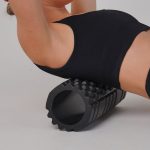
1) Foam Rolling (Large Muscle Groups)
I typically use this technique twice a week while I’m watching TV two hours before bed.
- How: Use a medium-density foam roller on calves, quadriceps, hamstrings, glutes, and upper back. Roll slowly (≈2–3 cm/sec). When you find a tender spot, pause and hold light-to-moderate pressure for 20–30 seconds while breathing steadily.
- Duration: 5–10 minutes in the evening, focusing on areas that feel dense or sore.
- Tip: Avoid rolling directly over joints or the lower back; keep pressure tolerable (≤6/10 discomfort).
2) Ball Release (Targeted Trigger Points)
- How: Use a lacrosse or massage ball against a wall or floor for precise areas (e.g., shoulders, chest, hips, feet). Pin the point and maintain steady pressure for 30–60 seconds. Add small,
- slow movements (“micro-glides”) to increase tissue shear.
- Duration: 3–5 minutes on 2–3 key spots before bed. For me, it’s usually the bottom of my feet.
- Tip: Pair with slow nasal breathing (4–6 seconds inhale, 6–8 seconds exhale) to encourage parasympathetic activation.
Practical Integration for Sleep
- Perform MFR 30–60 minutes before bedtime to allow arousal levels to settle.
- Follow with a brief wind-down routine (dim light, reduced screen exposure).
- Stay hydrated; fascia’s flexible properties depend on fluid balance.