
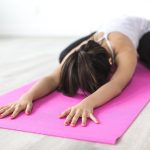
 Deep sleep exercise can tremendously improve your energy levels.
Most of us know we need to exercise for general health, but being in high-stress professions can make the thought of going to a gym or doing Cross-Fit an impossibility. I spend more time in the gym and stretching now than I ever did in the Air Force, and it’s helped my sleep tremendously.
However, the deep sleep exercise you need isn’t that intense and doesn’t require a lot of time. Data reflected in almost two dozen randomized controlled trial studies suggested that structured exercise can reduce insomnia symptoms. Part of this is because exercise stimulates release of adenosine, the hormone responsible for building your sleep drive.
These are the easiest deep sleep exercises to incorporate.
1. Walking (Best Overall Deep Sleep Exercise)
 Walking is one of the most reliable ways to improve sleep without stressing the body.
Why it works:
- Reduces stress hormones like cortisol
- Helps regulate circadian rhythm
- Increases time spent in deep sleep
- Low risk of overtraining or soreness
Best approach:
- 20–40 minutes per day
- Preferably outdoors in natural light
- Morning or early evening works best
Walking is especially helpful for people who feel “mentally tired but physically wired” at night.
In fact, I interviewed a doctor on my podcast a few years ago, and he said it seemed counterintuitive, but one of the things that he did if he couldn’t sleep after a long shift was get on his one-wheel and cruise the neighborhood. He figured a 30 minute ride leading to 4 more hours of sleep was better than no sleep at all.
 2. Resistance Training (Strength Training)
Strength training helps improve sleep by building physical fatigue in a controlled way and supporting hormonal balance. You don’t need gym equipment; you can start with bodyweight exercises like push ups, sit ups, and slow squats. They may be a challenge at first, but stick to it and you’ll appreciate the benefits.
Why it works:
- Supports growth hormone release during sleep
- Improves metabolic health, which is linked to sleep quality
- Reduces anxiety and improves mood stability
- Can increase slow-wave (deep) sleep
Best approach:
- 2–4 sessions per week
- Focus on major muscle groups
- Avoid training to complete exhaustion every session
Resistance training also helps reduce long-term muscle soreness when recovery is consistent.